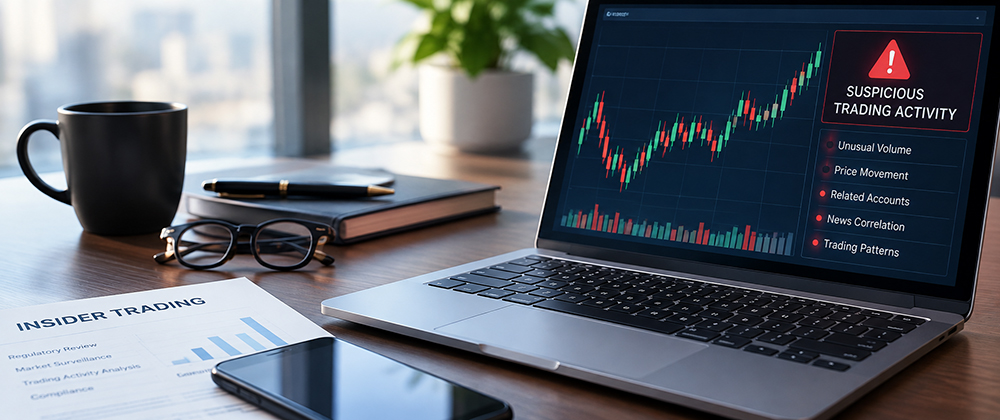

Key Takeaway: Although total Securities and Exchange Commission (SEC) enforcement actions declined by roughly 24% in Fiscal Year 2026, insider trading enforcement remains aggressive. According to former SEC Enforcement Division Senior Counsel and now SEC defense lawyer David R. Chase, the SEC has shifted away from high-volume peripheral filings toward targeted, data-driven prosecutions—charging individuals in roughly two-thirds of standalone cases and launching the Office of Super Intelligence and Analytics to flag anomalous trades.
Headline enforcement numbers at the SEC declined over the past year. Even so, corporate executives, financial professionals, and market participants should not mistake lower overall volume for reduced regulatory scrutiny. According to the Law Firm of David R. Chase—a nationally prominent boutique SEC defense law firm—the agency’s latest annual data reveals a sharp pivot toward high-impact individual accountability, with insider trading standing out as a top enforcement priority.
What Does FY 2026 Enforcement Data Reveal About SEC Insider Trading?
In its FY 2026 Enforcement Annual Results, the SEC reported filing 348 total enforcement actions, including 235 standalone cases. It also obtained $1.095 billion in monetary relief. Total actions fell roughly 24% from FY 2025, but the underlying metrics show where Enforcement staff are concentrating their resources:
| FY 2026 Enforcement Metric | Reported Figure | Strategic Significance |
|---|---|---|
| Total Enforcement Actions | 348 actions (down ~24% YoY) | Fewer peripheral filings; higher selectivity |
| Standalone Enforcement Actions | 235 cases | Core civil actions and administrative proceedings |
| Insider Trading Actions | 39 actions | Sustained priority targeting corporate and market insiders |
| Total Monetary Relief | $1.095 billion | $752M in disgorgement/interest + $343M in civil penalties |
| Individual Accountability Rate | ~67% (two-thirds) | Majority of standalone cases charged at least one individual |
Three enforcement patterns stand out for market participants:
- Sustained Focus on Insider Trading: The Commission brought 39 insider trading actions in FY 2026, targeting corporate insiders, attorneys, financial professionals, and tippees who traded ahead of mergers, quarterly earnings, and regulatory announcements.
- Individual Accountability Takes Center Stage: Roughly two-thirds of all standalone enforcement actions included charges against at least one individual rather than solely targeting corporate entities.
- Multi-Defendant Schemes and Criminal Exposure: High-profile FY 2026 actions included charges against 21 individuals in a multi-year insider trading ring involving material nonpublic information misappropriated from global law firms—underscoring how quickly civil SEC inquiries can intersect with Department of Justice (DOJ) criminal prosecutions.
How Does the SEC’s Office of Super Intelligence and Analytics Detect Insider Trading?
A major takeaway from the SEC’s FY 2026 enforcement report is the formal launch of the Office of Super Intelligence and Analytics. The Division of Enforcement no longer relies solely on traditional tips or whistleblower complaints. It deploys artificial intelligence and quantitative surveillance tools to detect anomalous trading patterns across equities and options markets.
When a stock moves sharply following a clinical trial update, earnings release, or merger announcement, SEC surveillance systems automatically flag profitable trades executed in the days or weeks beforehand. This happens even when the trader has no obvious corporate connection to the issuer.
For a closer look at how these alerts are generated, see Can the SEC Use AI to Detect Insider Trading? How SEC and FINRA Algorithms Flag Suspicious Trades.
How Can You Defend Against an SEC Insider Trading Investigation or Enforcement Action?
Because Enforcement staff are filing fewer peripheral cases, the investigations they do open are more selective, data-driven, and aggressively litigated.
For further analysis on how the SEC builds these cases and how seasoned defense counsel can strategically defend and potentially defuse an insider trading investigation, review our related guides:
- How to Beat an SEC Insider Trading Investigation: An inside look at how SEC staff analyze trading timelines, communications, and circumstantial evidence, and how early strategic intervention can stop an investigation before charges are filed.
- When the SEC Knocks: Defending Against Algorithmic Insider Trading Probes: An analysis of the strategic considerations of successfully defending an SEC insider trading investigation driven by Super Intelligence.
Why Is Early Retention of an SEC Defense Lawyer Critical?
Have you received an SEC subpoena, a voluntary request for information, or a Wells Notice involving suspected insider trading? (A Wells Notice is a formal notification that SEC staff intend to recommend enforcement charges.) What you say and produce in the earliest stages of the inquiry can determine the outcome of your case. It can also potentially reduce or eliminate parallel criminal exposure.
If you have received an SEC subpoena or are under investigation for insider trading, contact David R. Chase for a confidential conversation at 800-760-0912 or david@davidchaselaw.com.